Why Blue Lock is Considered One of the Greatest Sports Anime of All Time
September 6, 2025 | by Haku
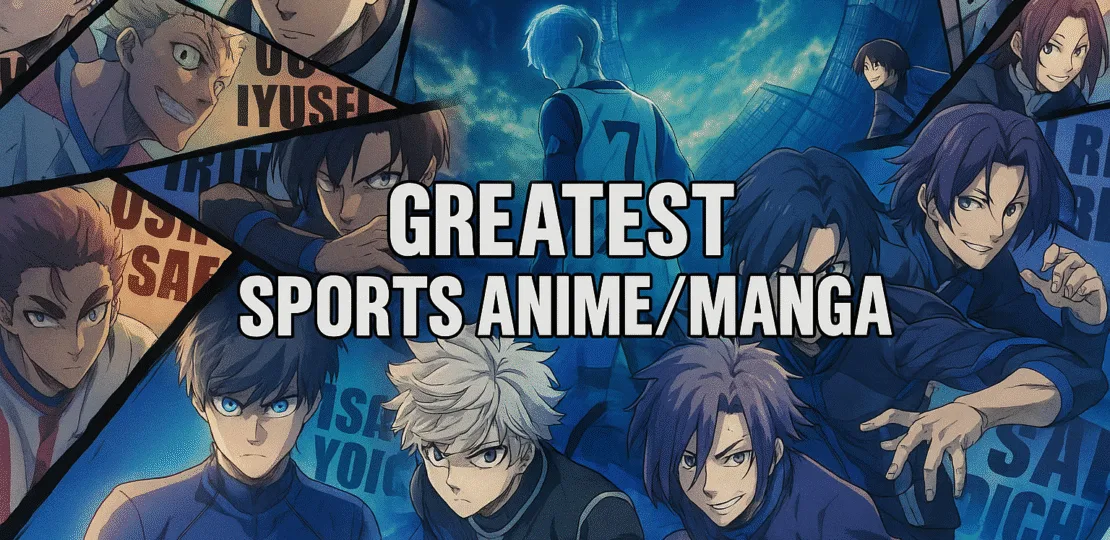
From its debut, Blue Lock has exploded into one of the most talked-about titles in modern sports anime. At its heart lies a radical concept: after Japan fails in the World Cup, the football association turns to Jinpachi Ego, a mysterious and ruthless coach. His plan is extreme. He recruits 300 young forwards, locks them into the facility called Blue Lock, and subjects them to brutal elimination trials. The goal is not to create a good team, but to forge the world’s greatest egotistical striker.
This setup immediately separates Blue Lock from every other sports anime. Instead of celebrating cooperation and harmony, it promotes egoism and self-centered ambition. The competition resembles a battle royale more than a traditional soccer match. It is as much about survival as it is about the sport itself.
What makes this approach so gripping is how fresh it feels. Where classics like Captain Tsubasa and Haikyuu!! thrive on teamwork, Blue Lock demands selfishness. It throws away the old message of “there is no I in team” and replaces it with “there is only I, or you will be crushed.” This bold philosophy has struck a chord worldwide, turning the series into both a fan favorite and a cultural milestone.
By 2025, the manga had sold over 45 million copies, and the anime adaptation became a global hit. Blue Lock has proven that sports anime can break conventions and still captivate millions.
From Manga Debut to Anime Phenomenon
The manga for Blue Lock began in 2018, written by Muneyuki Kaneshiro and illustrated by Yūsuke Nomura. Right from its early chapters, the story distinguished itself with a darker, more intense take on sports storytelling. Readers were drawn to its harsh rules, its philosophical undertones, and its sharp, energetic art style.
Recognition came quickly. Blue Lock was celebrated in polls as one of the best new sports series, and it won the Kodansha Manga Award for Shōnen in 2021. These achievements confirmed that the manga was more than just a passing trend—it was something powerful and original.
Then came the anime. In October 2022, studio 8bit premiered the adaptation. Season 1 ran for 24 episodes and immediately gained international attention. With streaming platforms and strong word of mouth, it became a sensation. Fans praised its fluid animation, gripping voice acting, and faithful adaptation of the manga’s intensity.
The anime boosted manga sales dramatically, pushing later volumes into best-seller lists. Soon after, announcements for a second season and a theatrical spin-off (Episode Nagi) expanded the franchise. By 2025, Blue Lock had become a multimedia powerhouse, translated and dubbed in multiple languages, embraced by fans around the globe.
A Unique and Daring Premise
Blue Lock’s premise is its greatest weapon. It asks a bold question: What if the only way to create a world-class striker is to strip away teamwork and force players to embrace pure ego?
Jinpachi Ego’s philosophy is ruthless. He argues that Japanese players fail internationally because their culture prioritizes harmony over individual greatness. To fix this, he transforms football into a survival game. Players must show off their unique “weapons”—their signature skills that make them stand out—or be eliminated.
The very first challenge sets the tone. In Episode 1, the 300 forwards play a twisted version of tag, where the last to score is expelled. This isn’t about fun or bonding; it’s about showing selfish desire to survive. From then on, every match carries do-or-die consequences. Fail once, and your career ends.
This premise gives Blue Lock an edge unlike anything else. It blends the thrill of competition with the suspense of survival games, creating an atmosphere that is both exhilarating and nerve-wracking. It’s soccer mixed with the high-stakes danger of a battlefield.
Themes of Ego, Ambition, and Survival
At its core, Blue Lock is not just about sports—it is about ambition, psychology, and identity.
The series asks one defining question: How far would you go to become the best? Every character must face the brutal truth that they can either rise above others or disappear in obscurity.
Ego preaches constantly that only egoism can produce greatness. He insists that every striker must treat their skill as a weapon, something no one else can replicate. For some, this weapon is speed. For others, vision. For others still, it is raw power. This philosophy shapes every player’s arc.
The anime visualizes these themes beautifully. When a player experiences growth, surreal imagery appears—lions roaring, shadows swirling, monsters lurking—to embody their mental breakthroughs. Soccer becomes an expression of their deepest desires and fears.
This is where the series stands out most: its willingness to explore the dark side of sports psychology. The heartbreak of betraying friends, the despair of elimination, the obsession with victory—all of it is laid bare. Viewers are constantly asked: Is it worth it? Is greatness worth losing everything else?
Yoichi Isagi and His Journey
Yoichi Isagi, the protagonist, represents the heart of this struggle. At first, he is timid, selfless, and unsure of himself. In fact, he enters Blue Lock ranked among the weakest of all 300 players.
But what sets him apart is his exceptional field vision. Isagi can analyze the field, predict plays, and adapt in real time. As he grows, this ability develops into his Metavision, a tactical skill that allows him to read the entire game at once.
Isagi’s story is about transformation. He begins hesitant to act selfishly, often passing the ball instead of taking the shot. But over time, he learns to embrace ambition and ego without losing his humanity. He becomes a leader who balances ruthless desire with tactical awareness.
This gradual evolution makes Isagi one of the most relatable protagonists in modern anime. Fans cheer not just for his goals, but for the mental battles he overcomes. He embodies the central theme: greatness demands both ego and growth.
The Larger Cast of Rivals
Blue Lock is not just Isagi’s story. It is an ensemble of memorable rivals and allies, each embodying a different aspect of ego.
- Meguru Bachira: A playful dribbler who imagines defenders as monsters to defeat. His creativity pushes Isagi to trust instinct as much as analysis.
- Rensuke Kunigami: A “football superhero” with strong morals, who wrestles with the conflict between fairness and selfishness.
- Hyōma Chigiri: Nicknamed Princess, a striker with lightning speed who overcomes fear of injury to rediscover his passion.
- Barō Shōei: The “King,” a selfish powerhouse who treats teammates as servants. His arrogance and raw strength embody pure ego.
- Reo Mikage and Sōichi Nagi: A genius playmaking duo. Reo’s vision feeds Nagi’s natural brilliance, but their partnership is tested as Nagi develops independence.
- Rin Itoshi: The cold and calculating prodigy, and Isagi’s greatest rival. He represents perfection, pushing Isagi to evolve further.
Every player is distinct. Their designs, personalities, and play styles make the matches unpredictable. Fans can always find a favorite among them, whether it’s the clever strategist, the selfish king, or the fearless sprinter.
Intensity on the Field
Blue Lock thrives on its competitive tension. Unlike many sports anime that build gradually toward climactic matches, here every second feels urgent.
From the beginning, the rules are merciless. Score or be eliminated. Even if your team loses, only the top goalscorer may survive. This constant risk makes each game as tense as a life-or-death duel.
Matches play out like strategic chess battles. Players exploit each other’s weaknesses, test new weapons, and adapt in real time. Every shot, feint, and pass has consequences. A single decision can make or break careers.
The intensity keeps viewers hooked. Even those who are not fans of soccer find themselves pulled in by the drama. Each game tells a mini-story, full of twists, rivalries, and emotional payoffs. By the end of a match, the audience feels as exhausted as the players.
This relentless pace is one of the key reasons Blue Lock stands apart. It turns every episode into an event that fans cannot stop talking about.
Visuals and Animation
One of the anime’s greatest strengths is its stunning animation and visual storytelling.
Studio 8bit infuses every match with cinematic flair. Critical moments freeze on players’ expressions or the ball in motion. Surreal imagery conveys their psychological state—lightning flashes, eyes glowing, beasts roaring. These choices elevate each play into something more than sports.
The style borrows from shōnen battle anime. Instead of punches or swords, the battlefield is the soccer field, and the weapons are passes, dribbles, and shots. The result feels larger than life.
Even when the animation dips in fluidity, the key frames are striking: torn jerseys, mud-smeared faces, sweat flying from hair, or a perfectly timed volley. Each shot becomes a piece of art.
The character designs, adapted faithfully from the manga, stand out with sharp lines, bold shading, and intense eyes. Combined with the unique overlays showing Isagi’s Metavision, the anime makes even complex plays easy to follow.
It is this blend of clarity and spectacle that makes Blue Lock’s matches so unforgettable.
The Manga’s Contribution
While the anime has reached a wide audience, the manga remains essential to the experience.
The artwork by Yūsuke Nomura captures the raw emotion of the sport with jagged, energetic linework. Characters are drawn with almost feral intensity, their faces twisted in obsession, determination, or despair. The manga also explores more subtle details of tactics and psychology, making it a rewarding read even after watching the anime.
Many fans appreciate how the manga dives deeper into rivalries and strategies, sometimes offering layers the anime condenses. Together, both mediums complement each other—anime for its movement and drama, manga for its depth and artistry.
Cultural Impact and Legacy
By 2025, Blue Lock had cemented itself as a cultural phenomenon. Its manga sales skyrocketed, its anime spread globally, and its spin-offs, films, and stage plays expanded its universe.
It has influenced the sports anime genre itself. Blue Lock proved that audiences are ready for bold experiments that mix sports with psychological thriller elements. It challenged the traditional values of teamwork and showed that even selfishness could create compelling stories.
It also became a gateway for non-sports fans. Viewers who never cared about soccer found themselves obsessed, because Blue Lock is as much about character drama and ambition as it is about the sport. Its matches are gripping whether you love football or not.
In fan communities, it consistently ranks among the greatest sports anime of all time, mentioned alongside the likes of Haikyuu!! and Slam Dunk. Its unique twist ensures it will be remembered as a landmark series.
What’s to Come
The future of Blue Lock looks brighter than ever. With more manga arcs to adapt, the anime still has dozens of matches, rivalries, and transformations ahead. The clash with the national U-20 team, the international training arcs, and the rise of Isagi’s true ego are still to be animated.
Each new season promises even higher stakes, more shocking eliminations, and more mind-blowing plays. The world of Blue Lock is only getting bigger, and fans eagerly anticipate what heights it will reach.
Conclusion
Blue Lock has earned its reputation as one of the greatest sports anime and manga because it dares to be different. With its unique premise, psychological depth, memorable characters, unrelenting tension, and stunning visuals, it redefines what sports anime can be.
By turning soccer into a battlefield of egos, it offers something fresh, thrilling, and unforgettable. Fans and critics alike celebrate it not just as a sports story, but as an exploration of ambition and identity.
Whether you follow the manga or the anime, Blue Lock delivers an experience that lingers long after the final whistle. It is a masterpiece of competition, survival, and self-discovery—a series that has truly changed the game.
RELATED POSTS
View all

Reincarnated as a Dragon Hatchling: Why It’s the Best Anime of 2026
July 30, 2025 | by Vanitas
All the Latest Anime News – From Sakamoto Days to Demon Slayer’s Global Shift
August 1, 2025 | by Haku