

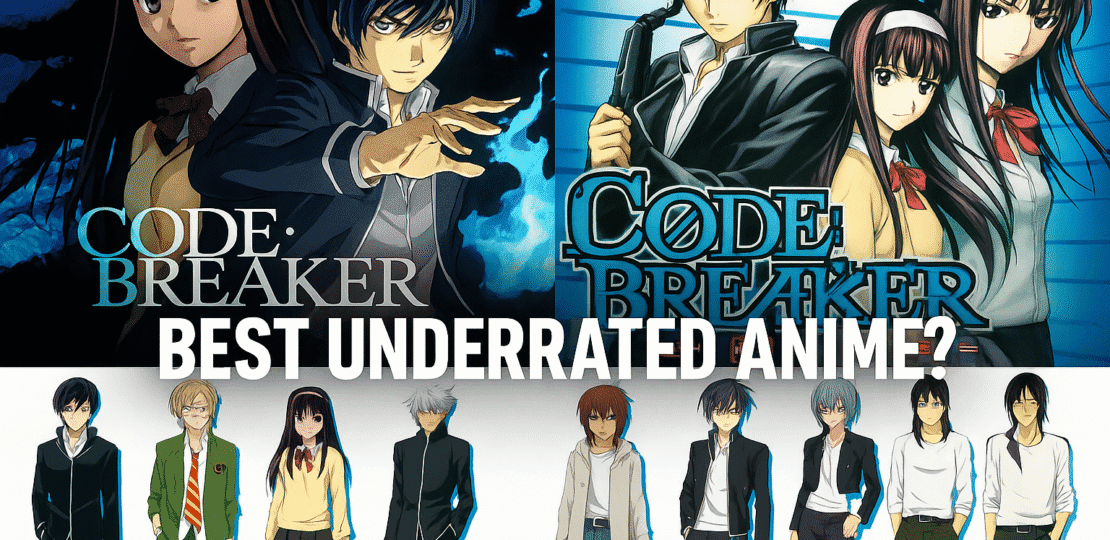
In the vast world of anime, juggernauts like Naruto, One Piece, and Attack on Titan dominate conversations. Yet hidden among them are forgotten gems that never got their due. One of these is Code: Breaker, a 2012 action-supernatural series blending moral dilemmas, explosive battles, and critiques of justice into a compact 13-episode run.
Adapted from Akimine Kamijyo’s manga, Code: Breaker follows a high school girl who stumbles into a shadowy world of government-sanctioned assassins with supernatural powers. Despite its intriguing premise and solid production values, it has stayed under the radar for over a decade, often eclipsed by longer-running shonen or flashier adaptations.
Why Code: Breaker Is Underrated
One reason is its brevity. At just 13 episodes, it lacks the sprawling arcs that help series build massive fanbases. Its release was also unlucky—airing in Fall 2012 alongside Sword Art Online and Psycho-Pass, both of which grabbed the spotlight.
The anime also adapts only part of the manga, leaving fans with a taste of a much bigger story. Many dismissed it as incomplete. Yet, those who dive in find a refreshing anti-hero tale with visceral action, complex characters, and surprisingly deep moral debates.
The Gripping Plot: Flames and Justice
The story begins when Sakura Sakurakōji, a principled high schooler, witnesses a boy incinerating criminals with eerie blue flames. The next day, the scene has vanished. Soon, the boy—Rei Ōgami—transfers into her class.
Ōgami is no ordinary teen. He’s Code:06, the youngest of the Code: Breakers, assassins employed by a secret group called Eden. Their creed is “evil for evil,” eliminating those the law cannot touch.
Sakura, who believes in redemption, clashes with his cold utilitarianism. Across 13 episodes, their relationship deepens as conspiracies, rogue ex-members, and political intrigue emerge. Antagonists like Hitomi, an ex-Code:01, push the team into betrayals and uneasy alliances.
What makes the plot unique is its relentless pace. Every episode pushes the story forward, balancing school-life comedy with brutal action. The finale at Sky Tower ties its arc neatly but hints at bigger battles from the manga.
Memorable Characters
Code: Breaker thrives on its ensemble. Ōgami, the stoic anti-hero with blue flames, embodies cold justice but hides a scarred past. Sakura, immune to powers, stands as the moral compass, stubbornly defending second chances.
The other Code:Breakers bring flair: Yūki manipulates sound, Toki controls magnetism, Rui bends shadows, and Heike wields light. Each has quirks and backstories that make the group dynamic engaging.
Antagonists are just as compelling. Hitomi’s vendetta and Yukihina’s icy calm blur the lines between villain and revolutionary. Power limits—tied to “life force”—prevent overpowered fights, adding strategy to battles.
Themes: Morality and Vigilantism
Beneath the action lies a sharp theme: what does justice really mean? The Code:Breakers embody “an eye for an eye,” while Sakura argues for mercy. Their conflict reflects debates over capital punishment and government overreach.
Symbolism is woven throughout. Blue flames signify judgment, while the “Lost” state warns of the cost of unchecked power. Eden itself critiques how shadow governments manipulate pawns in the name of order.
It may not rival Monster in philosophical weight, but it strikes a balance between action and reflection, making it accessible while still thought-provoking.
Production and Style
Directed by Yasuhiro Irie (Fullmetal Alchemist: Brotherhood), the anime delivers crisp action and sharp character designs. Kinema Citrus’s animation makes powers pop—flames crackle, shadows twist, and battles feel weighty.
The soundtrack adds punch, with GRANRODEO’s Dark Shame opening brimming with energy. Ending themes and OST tracks enhance both the tension and the melancholy. While not groundbreaking, the craftsmanship elevates the show.
Reception and Why It Stayed Hidden
At release, reviews were mixed. Code: Breaker sits at 6.7 on both MAL and IMDb—praised for fights but criticized for rushed pacing. Many compared it to Psycho-Pass and Death Note, but found it lighter in execution.
Its biggest hurdle was timing. Released in a stacked season and with only a partial manga adaptation, it never stood out in the mainstream. Fans still call it “criminally underrated,” with forum threads and X (Twitter) posts recommending it to lovers of hidden gems like Zatch Bell.
Manga vs. Anime
The anime adapts only the first arc, skipping richer storylines like advanced powers, Eden’s founding, and Sakura’s deeper heritage. The manga, running 26 volumes, fleshes out the world with bigger battles and shocking twists.
For those left hungry after the anime, the manga is the true completion. This gap is part of why fans still hope for a remake—because the potential is enormous.
Conclusion: A Hidden Flame Worth Finding
Code: Breaker may not top popularity charts, but it delivers a unique mix of action, ethics, and sharp characters. In just 13 episodes, it explores questions of justice while keeping the adrenaline pumping.
If you’re tired of endless sagas and want a compact yet impactful watch, Code: Breaker deserves your attention. Available on Crunchyroll, it’s a hidden gem waiting to be rediscovered.
RELATED POSTS
View all


Discover the Hidden Gems: 10 Underrated Anime You Must Watch in 2025
July 27, 2025 | by Vanitas

Attack on Titan: Why It Stands as One of the Greatest Anime Ever Made
August 26, 2025 | by Haku
Lord of the Mysteries – The Most Spellbinding Isekai You’re Still Sleeping On
August 2, 2025 | by Haku