

Why Monster Is One of the Greatest Psychological Thriller Anime Ever Made — And Why It Can’t Be Beaten
October 29, 2025 | by Haku
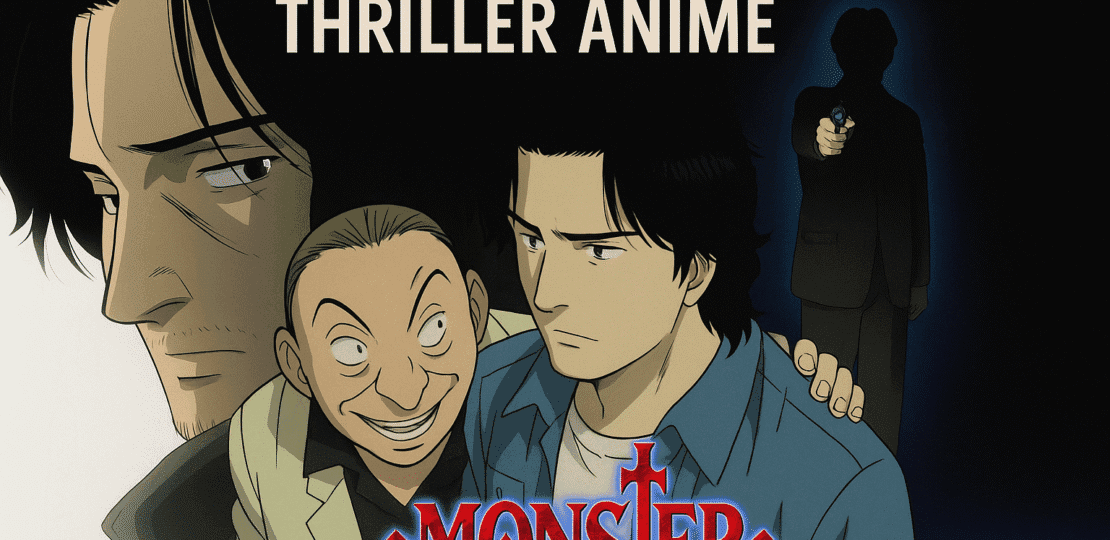
There are anime that entertain, and then there are anime that haunt your mind long after the credits roll. Monster, the 2004 psychological thriller based on Naoki Urasawa’s acclaimed manga, belongs firmly in the latter category. Set against a chillingly realistic backdrop of post–Cold War Europe, Monster transcends typical anime conventions. It’s not about superpowers, flashy battles, or fantasy worlds — it’s about the human psyche, morality, and the terrifying depths of evil that lurk in plain sight.
Two decades later, Monster remains the benchmark for psychological storytelling in anime — a title few, if any, have managed to surpass. But what makes it so untouchable? Why does Monster continue to dominate discussions among anime critics, fans, and scholars as a masterpiece of suspense and psychology?
Let’s break down why Monster isn’t just one of the best psychological thriller anime ever — it’s the one that set the standard no one else has matched.
🩸 A Story That Challenges the Boundaries of Good and Evil
At its core, Monster explores a chillingly simple question: “What is the value of a human life?”
Dr. Kenzo Tenma, a Japanese neurosurgeon working in Germany, makes a life-altering decision — he saves a young boy instead of a prominent politician. The boy, Johan Liebert, grows up to become one of anime’s most terrifyingly intelligent and charismatic villains. What follows is a 74-episode descent into moral ambiguity, guilt, and the horrifying consequences of one seemingly good choice.
Unlike many thrillers that rely on high-octane twists, Monster builds its tension through slow, deliberate storytelling. Every episode unravels another layer of Johan’s past and Tenma’s pursuit, forcing viewers to confront uncomfortable moral questions.
The brilliance of Monster lies in how it portrays evil not as something supernatural, but as a human creation — the product of trauma, ideology, and manipulation. It’s an unnervingly plausible kind of horror that resonates far deeper than any jump scare or gore sequence ever could.
🧩 Johan Liebert — The Perfect Antagonist
If there’s one reason Monster remains unbeatable, it’s Johan Liebert.
Anime has produced its share of iconic villains, but Johan stands in a league of his own. He’s not loud, brash, or obviously monstrous — he’s calm, elegant, and eerily polite. His presence alone bends the world around him, manipulating people into committing unspeakable acts without ever raising his voice.
What makes Johan terrifying isn’t what he does, but what he represents: the idea that absolute evil can wear a beautiful face. He’s an embodiment of nihilism, believing that life is meaningless and that everyone harbors darkness. Through his quiet persuasion, Johan exposes the fragile morality of society — and in doing so, becomes the reflection of humanity’s worst fears.
The genius of Urasawa’s writing is that Johan never feels like a caricature. He’s believable, and that’s what makes him haunting. His intelligence rivals Light Yagami from Death Note, but his motives and methods are purer in their malevolence. Johan doesn’t crave godhood — he seeks nothingness.
No other anime antagonist has matched Johan’s psychological complexity and existential menace, making him one of the finest villains not just in anime, but in storytelling as a whole.
🧠 Deep Psychological Realism and Philosophical Weight
While Monster is undeniably a thriller, it’s also a profound philosophical study of identity, guilt, and morality.
Every major character — from Tenma to Inspector Lunge, to the countless victims and witnesses along the way — carries deep psychological scars. Their struggles mirror real human experiences: survivor’s guilt, obsession, moral paralysis, and the search for redemption.
Urasawa’s genius lies in how he blends psychology with suspense. The series feels like reading Dostoevsky or watching Hitchcock. It’s a slow-burn, cerebral experience that rewards patient viewers with moments of devastating emotional clarity.
Where modern thrillers often rely on shock value, Monster relies on existential dread — the realization that anyone, under the right conditions, can become a monster.
🌍 Realism and Setting — Europe as a Character
Unlike most anime, which take place in fantastical Japan-inspired worlds, Monster is set in real European locations — Germany, the Czech Republic, and other post–Cold War regions.
This setting is not just aesthetic; it’s integral to the narrative. The crumbling walls of East Germany, the shadow of the Cold War, and the rise of ideological extremism all feed into Johan’s origins and the larger mystery of the series.
The level of detail is astonishing. From the architecture to the social atmosphere, everything feels authentic. The realism anchors the story and amplifies its psychological weight — making Monster feel less like fiction and more like a disturbing mirror of our own world.
🎭 Masterclass in Storytelling and Pacing
Monster is a textbook example of long-form storytelling done right.
Its pacing is deliberate, almost meditative. Each of the 74 episodes builds upon the last, layering subplots, flashbacks, and character studies that converge seamlessly in the end. This slow unfolding allows the tension to simmer rather than explode — a quality that few modern series dare to attempt.
Unlike typical anime arcs, Monster doesn’t rely on “filler.” Every scene matters, every conversation reveals something critical. It’s storytelling for adults — methodical, haunting, and emotionally exhausting in the best way possible.
🎬 Direction and Atmosphere — A Cinematic Experience
Directed by Masayuki Kojima (Made in Abyss), Monster feels more like a European crime drama than a conventional anime.
The muted color palette, realistic animation style, and haunting soundtrack by Kuniaki Haishima create an atmosphere that’s deeply unsettling. The lack of overt visual exaggeration allows the viewer’s imagination to do the heavy lifting, intensifying the psychological horror.
Kojima’s direction also uses silence to great effect. Long pauses, empty corridors, and still frames heighten the unease, reminding us that sometimes the scariest moments are the quiet ones.
🔍 Influence and Legacy — The Benchmark for Psychological Anime
When people discuss “intelligent anime,” Monster is always near the top of the list. It has inspired countless creators and influenced series like Death Note, Paranoia Agent, Erased, and Perfect Blue.
Yet none have truly replicated its depth or realism. While other thrillers dazzle with twists and mind games, Monster maintains a moral and psychological weight that keeps it timeless.
In an era of fast-paced, easily digestible anime, Monster stands as a reminder that storytelling can be patient, complex, and deeply human — and still utterly captivating.
💭 Why Monster Can’t Be Beaten
So why hasn’t Monster been dethroned as the king of psychological thrillers? The answer lies in its perfect balance of realism, intellect, and emotional gravity.
- It doesn’t depend on flashy gimmicks — it’s timeless.
- It challenges viewers to think, not just react.
- Its villain is terrifyingly human.
- Its message is eternal: the real monster lives within us.
No other anime has captured that chilling truth with the same precision and restraint. While Death Note, Paranoia Agent, and Psycho-Pass each have their strengths, Monster remains peerless in its philosophical and emotional depth.
Even twenty years later, Monster isn’t just a story — it’s an experience, a haunting echo of human nature’s darkest corners.
🏁 The Unmatched Genius of Monster
In a landscape overflowing with psychological thrillers, Monster still reigns supreme. Its meticulous storytelling, morally complex characters, and chilling realism make it more than an anime — it’s a masterpiece of psychological art.
Whether you’re a casual viewer or a critic dissecting narrative structure, Monster delivers an experience that’s as intellectually engaging as it is emotionally devastating.
It’s not just one of the best psychological thriller anime of all time. It’s the standard by which all others are measured — and none have yet surpassed it.
RELATED POSTS
View all


Top 10 Anime Like Re:Zero – Must-Watch Isekai & Dark Fantasy Picks
November 5, 2025 | by Vanitas

Latest Anime News August 16 2025 – A Whirlwind of Exciting Revelations and Milestones
August 15, 2025 | by Haku